 Seniors & Retirement
How Retirement Changes Your Life Insurance Needs
Retirement changes almost every financial equation, and life insurance is no exception. The reasons a person carries coverage at 45 are often quite different from the reasons at 70, and policies chosen decades ago may or may not still fit. Understanding how needs typically evolve makes it easier to review your own situation with fresh eyes.
Income Replacement Fades as a Driver
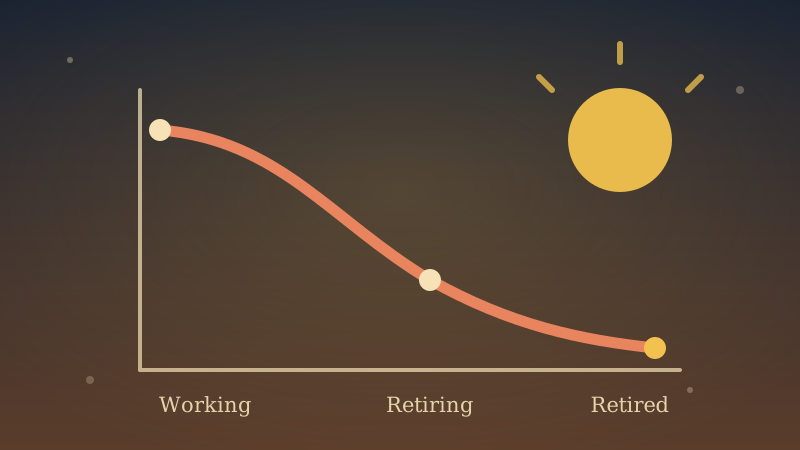
During working years, the central purpose of life insurance for many households is replacing a paycheck if a breadwinner dies. Once paychecks stop and retirement income sources begin, that purpose largely disappears. This is why large term policies are often allowed to expire around retirement: the risk they addressed has passed. What remains are needs of a different character.
Needs That Persist or Emerge
Several purposes for coverage commonly continue into or arise during retirement:
- Covering final expenses such as funeral, burial, or cremation costs
- Clearing modest debts so they do not pass as burdens to family
- Providing for a surviving spouse whose household income may change
- Leaving a legacy for children, grandchildren, or charitable causes
- Equalizing inheritances when assets like a home are hard to divide
These needs tend to be lifelong rather than temporary, which is why permanent coverage such as whole life, including smaller final expense policies, features prominently in retirement planning conversations.
Employer Coverage Often Ends
Many people carry group life insurance through work without thinking much about it. At retirement, that coverage frequently ends or reduces, sometimes with options to convert to an individual policy within a set window. Reviewing what happens to employer coverage before retiring, and noting any conversion deadlines, prevents an unintended gap.
A Practical Review Process
A retirement-era insurance review does not need to be complicated. List every policy in force, its type, amount, premium, and beneficiary. Ask what each policy is for in today's terms, not the terms of decades ago. Identify gaps, such as no coverage for final expenses, and redundancies, such as overlapping small policies. Then adjust deliberately, keeping in mind that replacing existing coverage can restart contestability periods, so changes deserve care and, ideally, guidance from a licensed insurance professional.
Revisit as Retirement Unfolds
Retirement itself has stages, and needs at 80 can differ from needs at 65. A brief review every few years, or after major events like the loss of a spouse, keeps coverage aligned with life as it actually is. Life insurance in retirement is less about replacing income and more about easing burdens, and with periodic attention it can do that job well.
Article Was Generated By AI.